
Meniscus and its tears
Meniscus Tear: Symptoms, Treatment Options, Debridement and Meniscus Repair
The meniscus is a C-shaped cartilage cushion between the femur and tibia. It plays a key role in shock absorption, stabilising the knee, and distributing load during walking, running and sports. Meniscus tears are common in young athletes and active adults, as well as in older individuals due to degeneration. Patients in Dehradun and Uttarakhand often present with pain, swelling or locking of the knee following injury.
Causes of Meniscus Tears
Meniscus injuries commonly occur due to:
- Sudden twisting or rotation of the knee
- Sports involving pivoting or deep squatting
- Degenerative changes with age
- High-impact activities or trauma
Symptoms of a Meniscus Tear
- Pain along the joint line
- Swelling within hours or the next day
- Stiffness and difficulty bending the knee
- Clicking, catching or popping sensation
- Recurrent locking of the knee
- Feeling of instability
An MRI scan is the most reliable method to confirm the diagnosis.
Treatment Options for Meniscus Tears
The choice of treatment depends on age, activity level, type of tear, vascularity and associated knee injuries such as ACL tears. At Hari Ram Kohli Memorial Hospital, Dehradun, we follow evidence-based protocols and prioritise meniscus preservation whenever possible.
1. Non-Surgical Treatment
Certain tears may improve with conservative measures:
- Physiotherapy to restore strength and motion
- Anti-inflammatory medication
- Activity modification
- Ice therapy
- Bracing when indicated
However, mechanical symptoms such as locking usually require arthroscopic management.
Arthroscopic Surgical Options
Modern arthroscopy allows precise treatment through small incisions, leading to faster recovery and minimal tissue trauma.
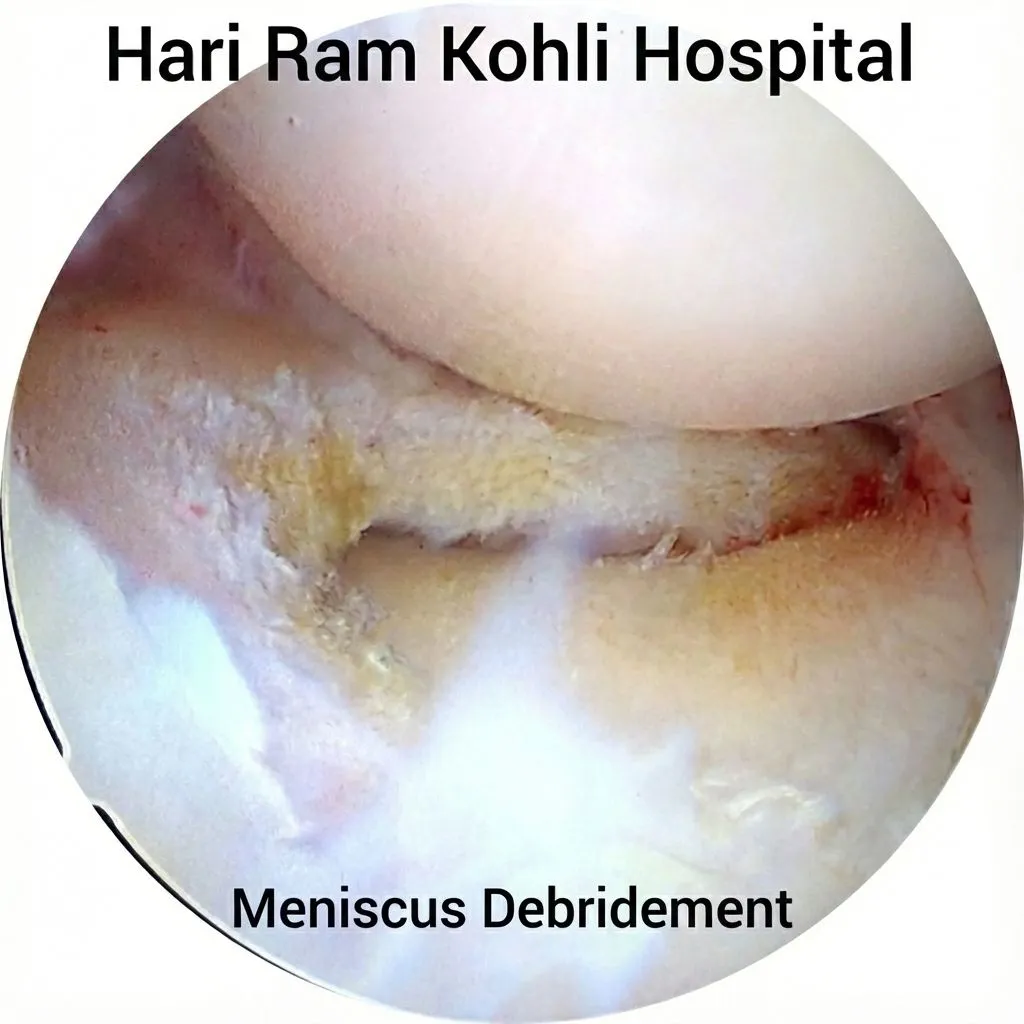
2. Arthroscopic Meniscal Debridement (Partial Meniscectomy)
This procedure removes only the torn, unstable or frayed portion of the meniscus while preserving as much healthy tissue as possible.
Indications:
- Degenerative tears
- Complex tears not suitable for repair
- Tears in avascular “white-white” zone
- Patients with low healing potential
Benefits: Small incisions, rapid recovery, early return to routine activities.
3. Inside-Out Meniscus Repair
A gold-standard repair technique used for tears with good healing potential. Stitches are passed from inside the joint to outside through a small incision, providing strong fixation.
Best suited for:
- Vertical longitudinal tears
- Buckethandle tears
- Red-red and red-white zone tears
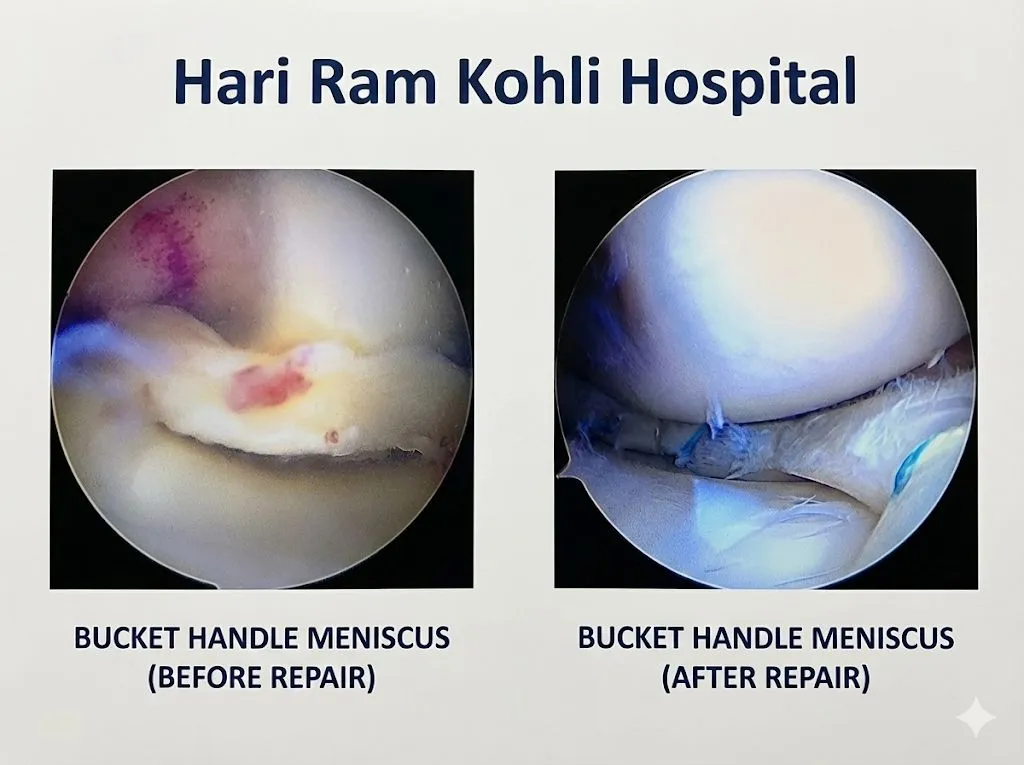 Advantages: Strong repair, high healing rates, restores natural meniscus function.
4. All-Inside Meniscus Repair
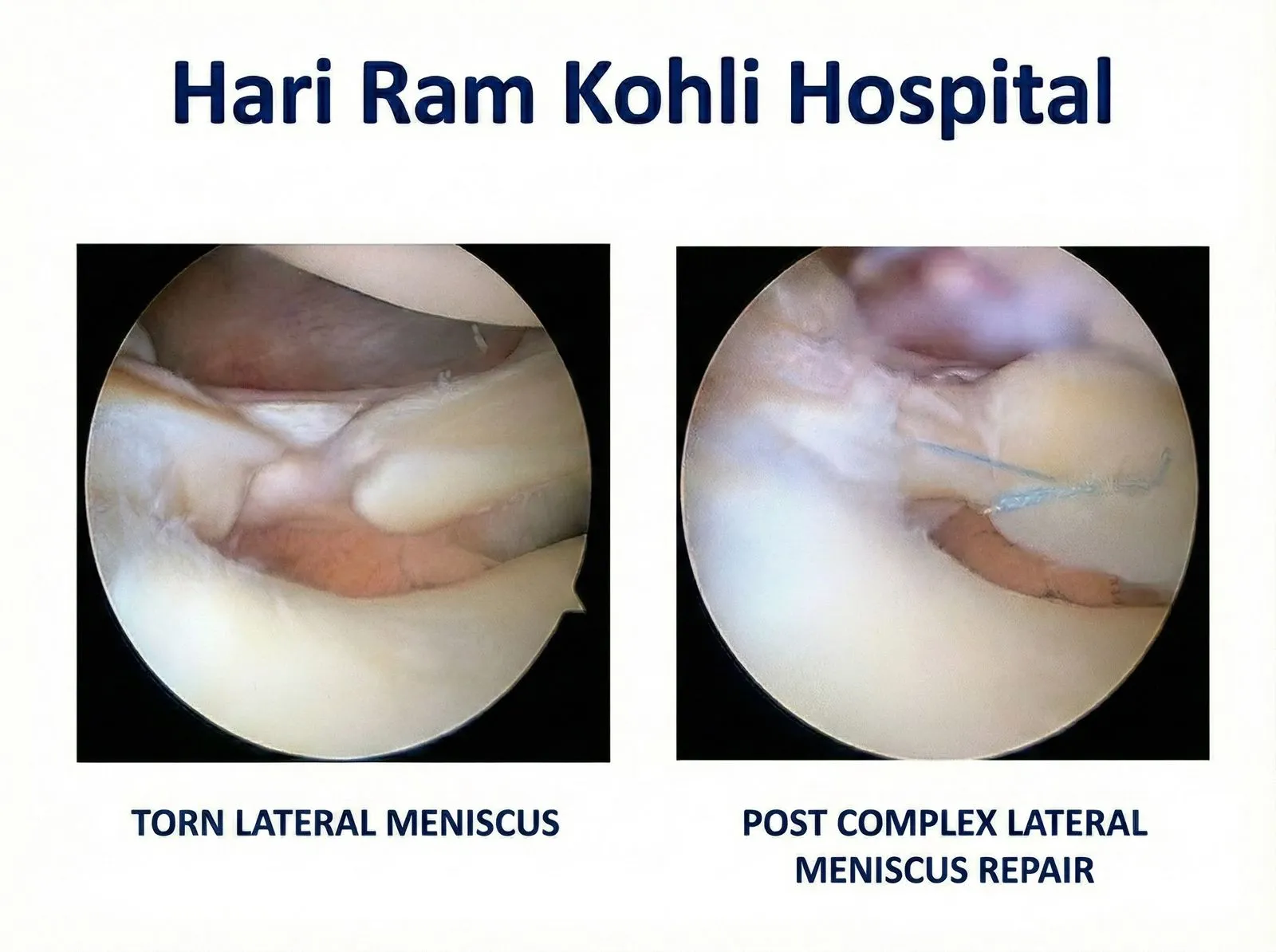 A minimally invasive technique using implant-based devices to repair the meniscus entirely within the joint.
Indications:
- Horizontal or oblique tears
- Tears accessible arthroscopically without additional incisions
- Young and active patients
Advantages: No supplementary incision, reduced discomfort, shorter operative time.
Recovery After Meniscus Surgery
Recovery depends on whether the meniscus was debrided or repaired.
After Debridement
- Walking usually allowed immediately or next day
- Return to office work within 3–5 days
- Full activity in 3–4 weeks
After Repair (Inside-Out or All-Inside)
- Brace support may be advised
- Weight-bearing guided by tear type
- Sports training after approximately 3 months
- Full return to sports in 4–6 months
Physiotherapy plays a vital role in achieving optimal recovery.
Why Choose Hari Ram Kohli Memorial Hospital?
- Specialised arthroscopy services
- Experience in ACL + meniscus combined injuries
- Availability of modern repair devices
- Structured rehabilitation protocols
- Evidence-based decision-making
Conclusion
Meniscus tears are common but highly treatable. With modern arthroscopic techniques like debridement, inside-out repair and all-inside repair, patients can expect excellent functional outcomes. Early diagnosis and appropriate treatment help prevent long-term knee degeneration.
If you are experiencing knee pain, locking or instability, early evaluation can protect long-term joint health.
ACL Reconstruction. To learn about arthritis treatment options, read our Total Knee Replacement Guide.
Have questions?
If you have any queries we are here to resolve them.
You can leave us a message and we will get back asap.